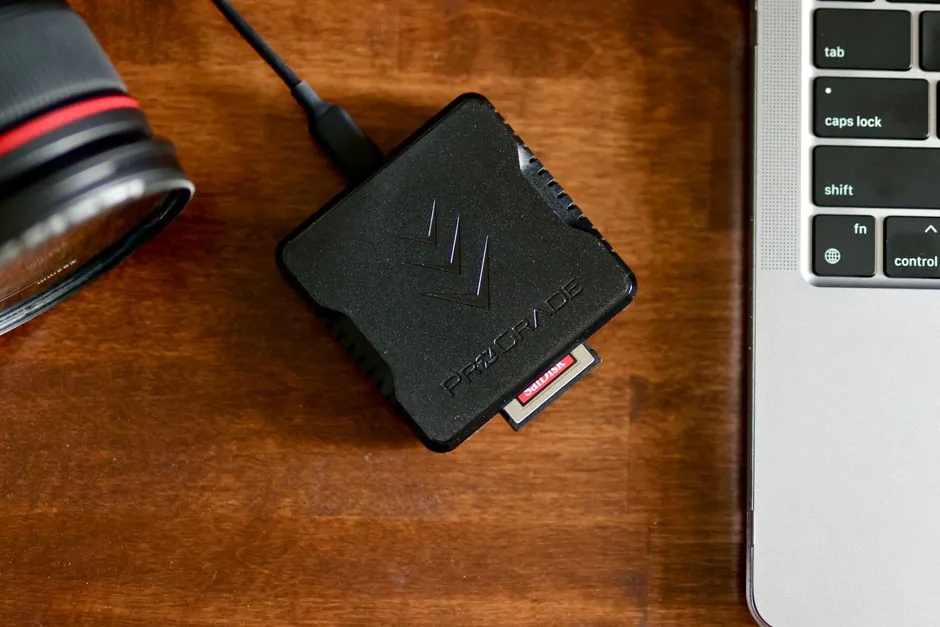
For live-camera operators, streamers, and anyone who spends more time moving files than shooting them, the value here is simple: less waiting between capture and edit. Glyph has started shipping its Capture+ CFexpress Type B USB4 Memory Card Reader, and the company is positioning it as a production-focused accessory for fast offloads and direct-edit workflows. The reader is now listed as “Now Shipping!” on Glyph’s product page.
That matters because the pain point is familiar across our audience. Whether the footage comes from a high-end cinema body, a field rig, or a camera used to document a public webcam setup, the bottleneck often appears after recording ends. A faster reader can shorten the gap between recording, backup, and review, which is especially useful when a shoot is still active and the next card needs to go back in the camera quickly.
Glyph says the Capture+ is shipping now
Glyph’s new reader is built for CFexpress Type B media and is being marketed toward photographers, filmmakers, and content creators working with large stills and video files. The company’s product page now marks the device as available, which is the main news here: the reader has moved from announcement to shipping.
The Capture+ name also signals the product’s intended audience. This is not a consumer accessory aimed at casual file transfers from phones or tablets. It is a production tool meant for users who regularly handle dense media files, where consistent ingest speed can shape the pace of a day’s workflow.
Why CFexpress Type B readers matter in real workflows
CFexpress Type B has become a common format in higher-end cameras because it supports the demands of large RAW stills and high-bitrate video capture. In practical terms, that means bigger files, larger cards, and more time spent offloading media once the recording stops.
For camera operators and editors, the reader can be just as important as the camera itself. On a busy production day, the ability to copy footage quickly affects backup routines, card rotation, and how soon the material can move into the edit. That is especially relevant for crews under deadline pressure, as well as for creators who cut highlights while still on location.
For our readers who monitor or run public webcam feeds, the workflow is different but the underlying problem is familiar. Time spent moving, archiving, or reprocessing large files can delay publication and slow down operations. Any accessory that reduces friction between capture and publish is part of the same operational toolbox, even if the camera source is fixed rather than handheld.
USB4 is the interface Glyph chose
Glyph says the Capture+ uses USB4, a modern connectivity standard designed to support high-speed transfers on compatible systems. The company is clearly aiming the reader at users who want to maximize throughput and make full use of fast media, though real-world performance will still depend on the card, the host computer, and the rest of the workflow.
That caveat matters. A fast reader does not automatically guarantee fast results if the computer, cable, or storage destination becomes the bottleneck. In practice, the reader is one part of a larger ingest chain that includes the camera card, the port on the machine, and the destination drive or editing setup.
For production teams, that makes compatibility worth checking before purchase. Buyers will want to confirm port support, cable needs, and whether their current machine can take advantage of the interface the reader is built around. A reader is only as useful as the system it plugs into.
How it fits into location and edit workflows
The most obvious use case is location ingest. A compact CFexpress reader can live in a travel kit, plug into a laptop, and handle card dumping between takes or at the end of a shoot. That is useful for freelancers, small crews, and remote creators who need a dependable way to move footage without carrying a full desktop workflow.
It also fits into card-cloning and backup routines. Many production teams prefer to create a second copy before a card is reformatted, especially when the footage is irreplaceable or the shoot cannot be repeated. Faster transfer hardware helps keep those checks from becoming the slowest part of the day.
For editors, the direct-edit angle is just as important. When a reader can move footage quickly enough, clips can be reviewed, organized, and sometimes even cut before all the media has finished copying. That can shave time off the path from capture to publish, which is why accessories like this tend to matter more on deadline-driven jobs than on casual shoots.
The product also belongs in the broader ecosystem of creator hardware that supports live and near-live production. Our coverage often tracks the cameras themselves, such as the Abbey Road Crossing public webcam or the Lyn’s Laundry street view camera, but the workflow behind those feeds still depends on the same kind of practical tooling: reliable ingestion, fast handoffs, and predictable storage management.
What to watch before buying
At this stage, the key fact is shipping status. Glyph is not saying much beyond availability and positioning, so there is no need to read more into the launch than the company has stated publicly. The reader joins a crowded category of storage accessories aimed at speeding up creative workflows, and the market continues to expand as camera files get larger and turnaround windows get tighter.
Prospective buyers should still compare the basics: whether their computer has the right port, whether the supplied cable fits their setup, and how the asking price compares with other CFexpress Type B readers. Those practical details often matter more than branding when a piece of hardware is expected to live in a production bag and work every day.
For readers in our niche, the next thing to watch is which creator-focused accessories actually reduce downtime in the field, not just on a spec sheet.